Rx Only
Ointment
- High-strength keratolytic
- Simple single-ingredient option
- 180-Day BUD
- 30 g jar

This topical ointment contains salicylic acid 60%. It is available by prescription in a 30 g jar.
This product is formulated with a white petrolatum base. The ointment is a white to faintly yellowish semisolid with a smooth, unctuous consistency. Practically odorless, it is well-suited for topical pharmaceutical preparations. The base supports stability, compatibility, and uniform delivery of active ingredients.
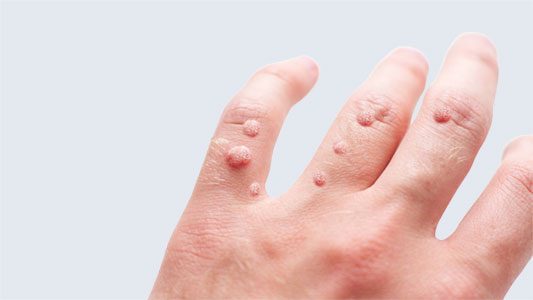
Salicylic acid 60% ointment treats warts by dissolving the intercellular cement between keratinocytes, leading to desquamation of the horny layer without damaging the viable epidermis and resulting in gradual wart tissue destruction [1]. This keratolytic action progressively removes infected epithelium while inducing mild local inflammation that stimulates immune activity and enhances clearance of HPV-infected cells [2].
Cutaneous warts are benign skin growths caused by human papillomavirus (HPV), most commonly presenting as common, plantar, or flat warts [3]. HPV infects basal epithelial cells through breaks in the skin, replicating with the epithelial lifecycle and spreading via direct contact or contaminated surfaces [4]. While most warts resolve spontaneously, two-thirds of children clear them within two years, treatment may be sought for pain, cosmetic concerns, or fear of transmission [5]. Options include chemical or physical destructive methods, though these can be painful, risk scarring, and show variable efficacy, so treatment decisions should be evidence-based [6]. Preventive hygiene measures, such as not sharing personal items, wearing footwear in communal areas, and inspecting feet regularly, can help reduce transmission and support early detection [7].
Salicylic acid 60% ointment treats warts by dissolving the intercellular cement between keratinocytes, leading to desquamation of the horny layer without damaging the viable epidermis and resulting in gradual wart tissue destruction [1]. This keratolytic action progressively removes infected epithelium while inducing mild local inflammation that stimulates immune activity and enhances clearance of HPV-infected cells [2]. A meta-analysis of six randomized controlled trials found it to be more effective than placebo for cutaneous warts across all sites. In the largest trial, wart surfaces were pared down before applying 40% salicylic acid daily for up to 13 weeks. However, this treatment should be avoided on the face or in areas prone to poor healing because of the risk of chemical burns [8]. Higher concentrations improve efficacy, with cure rates of 81% in two weeks in some studies [2], and combination therapy of a 70% topical with cryotherapy achieving eradication rates of 89.2% [9].
1. PRESCRIBER & PATIENT INFORMATION
Prescribing clinician’s name, licensing information, address and contact information. Patients’ full name, date of birth, shipping address and contact information.
2. COMPLETE PRESCRIPTION INFORMATION
Include: drug, dosage, and dosage form, quantity, SIG, and refills if requested.
3. PRESCRIPTION TRANSMITTAL
Fax: (940) 382-2694
Phone: 940-382-6758 | Speak to a pharmacist
Escribe ID: 0903012660 or CARIE BOYD Pharmaceuticals
• Select Medication from the drop-down menu (bulk ingredient or powder is OK)
• Use the words Please Compound in the SIG or Comments section followed by the compounded medication you want to NOTE: If you cannot find the same strength or form, that’s OK, write exactly what you want into the SIG or Comments section. In most cases we’ll be able to custom compound the prescribed medication.
Store at controlled room temperature. Protect from light.
[1] Trinity Pharmaceuticals, LLC. (n.d.). Salicylic acid 6% cream and salicylic acid 6% lotion [Drug label]. Retrieved from https://dailymed.nlm.nih.gov
[2] Parish LC, Monroe E, Rex IH Jr. Treatment of common warts with high-potency (26%) salicylic acid. Clin Ther. 1988;10(4):462-6. PMID: 3274251
[3] Kilkenny M, Merlin K, Young R, Marks R. The prevalence of common skin conditions in Australian school students: 1. Common, plane and plantar viral warts. Br J Dermatol 1998;138(5):840–45. doi: 10.1046/j.1365-2133.1998.02222.x.
[4] Sanclemente G, Gill DK. Human papillomavirus molecular biology and pathogenesis. J Eur Acad Dermatol Venereol 2002;16(3):231–40. doi: 10.1046/j.1473-2165.2002.00419.x. Search PubMed
[5] Bruggink SC, Eekhof JA, Egberts PF, van Blijswijk SC, Assendelft WJ, Gussekloo J. Natural course of cutaneous warts among primary schoolchildren: A prospective cohort study. Ann Fam Med 2013;11(5):437–41. doi: 10.1370/afm.1508.
[6] Sterling JC, Gibbs S, Haque Hussain SS, Mohd Mustapa MF, Handfield-Jones SE. British Association of Dermatologists’ guidelines for the management of cutaneous warts 2014. Br J Dermatol 2014;171(4):696–712. doi: 10.1111/bjd.13310.
[7] Friedman PC. Management of difficult-to-treat warts: Traditional and new approaches. Am J Clin Dermatol 2021;22(3):379–94. doi: 10.1007/s40257-020-00582-4. Search PubMed
[8] Kwok CS, Gibbs S, Bennett C, Holland R, Abbott R. Topical treatments for cutaneous warts. Cochrane Database Syst Rev 2012;2012(9):CD001781. doi: 10.1002/14651858.CD001781.pub3.
[9] van Brederode RL, Engel ED. Combined cryotherapy/70% salicylic acid treatment for plantar verrucae. J Foot Ankle Surg. 2001 Jan-Feb;40(1):36-41. doi: 10.1016/s1067-2516(01)80039-9. PMID: 11202766.
- (940) 382-6758
- Monday through Friday 9:00 am - 6:00 pm CT
- [email protected]