Rx Only
Cream
- Metronidazole for active infection
- One-tube regimen
- 180-Day BUD
- 30 g pump
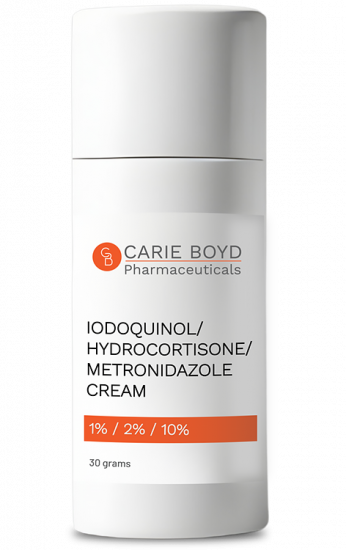
This topical cream contains iodoquinol 1%, hydrocortisone 2%, and metronidazole 10%. It is available by prescription in a 30 g pump.
This combination is formulated in a polyethylene and mineral oil gel base commonly used for topical preparations. It has a soft elegant feel and is anhydrous.
The combination of iodoquinol, hydrocortisone, and metronidazole provides a multifaceted approach to treating intertrigo by addressing microbial, inflammatory, and anaerobic components simultaneously.
Iodoquinol functions as both an antifungal and antibacterial agent, with particular activity against Candida species that commonly complicate intertrigo, and demonstrates limited systemic absorption, reducing systemic exposure [1, 2].
Hydrocortisone reduces inflammation, erythema, and pruritus through anti-inflammatory and vasoconstrictor properties [1].
Metronidazole acts primarily against anaerobic bacteria such as Bacteroides spp. by diffusing into microbial cells, where intracellular reduction generates nitroso free radicals that disrupt DNA synthesis and cause cell death [3].
Together, this triple therapy provides comprehensive coverage by targeting fungal and bacterial pathogens, reducing the inflammatory burden, and interrupting the cycle of friction, moisture, and secondary infection characteristic of intertrigo, making it particularly beneficial in complicated cases with suspected mixed infections.
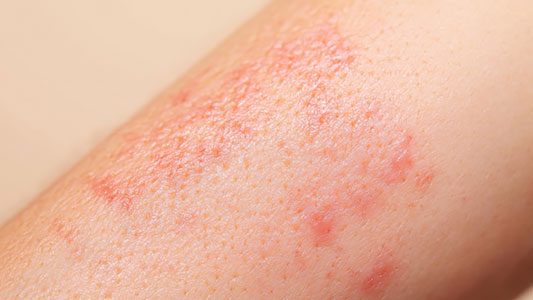
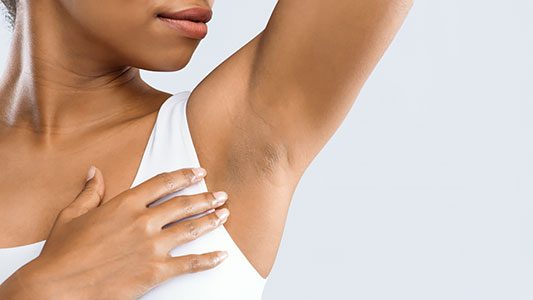
Intertrigo is primarily caused by skin-on-skin friction in opposing surfaces, worsened by trapped moisture, poor ventilation, heat, humidity, sweating, and inadequate drying, with contributing factors such as obesity, diabetes, immunocompromised states, and incontinence [2, 4]. The compromised skin barrier creates an ideal environment for secondary infections, commonly involving Candida albicans with satellite pustules, dermatophytes causing tinea, Staphylococcus aureus (including MRSA), group A β-hemolytic streptococcus producing erythema and scaling, Corynebacterium minutissimum identified by coral-red fluorescence under Wood’s lamp, and gram-negative bacteria such as Pseudomonas aeruginosa [2]. Intertrigo frequently affects axillae, inframammary folds, pannus, inguinal folds, intergluteal cleft, web spaces, and infant neck folds, following a cycle of friction, moisture accumulation, maceration, barrier breakdown, microbial colonization, and escalating inflammation. Risk factors include obesity (BMI >30), poor glycemic control, hyperhidrosis, immunosuppression, hot and humid climates, poor hygiene, tight clothing, occlusive products, incontinence, and limited mobility, and recurrence is likely if secondary infections are treated without addressing the underlying mechanical and environmental contributors [5].
Research shows that intertrigo can be effectively treated with a combination of topical hydrocortisone and iodoquinol, as this combination addresses both the inflammatory and infectious components of the condition, particularly in moist skin folds where colonization worsens inflammation [2, 4]. Metronidazole may be added when a bacterial component is suspected, as evidence from rosacea studies shows it significantly improves inflammatory lesions within 3 weeks and is well tolerated [6]. Comparative data support combination therapy: antifungal-corticosteroid regimens have demonstrated rapid symptom improvement in Candida-associated cases [7]. Treatment typically includes topical low-potency steroids for mild to moderate cases without infection, iodoquinol-hydrocortisone combinations for suspected microbial involvement, and topical metronidazole for significant bacterial overgrowth. Overall, clinical evidence supports these agents when both inflammation and microbial colonization are present [8]. The treatment of intertrigo requires a comprehensive approach that addresses both the underlying causes and the symptoms of the condition.
1. PRESCRIBER & PATIENT INFORMATION
Prescribing clinician’s name, licensing information, address and contact information. Patients’ full name, date of birth, shipping address and contact information.
2. COMPLETE PRESCRIPTION INFORMATION
Include: drug, dosage, and dosage form, quantity, SIG, and refills if requested.
3. PRESCRIPTION TRANSMITTAL
Fax: (940) 382-2694
Phone: 940-382-6758 | Speak to a pharmacist
Escribe ID: 0903012660 or CARIE BOYD Pharmaceuticals
• Select Medication from the drop-down menu (bulk ingredient or powder is OK)
• Use the words Please Compound in the SIG or Comments section followed by the compounded medication you want to prescribe.
NOTE: If you cannot find the same strength or form, that’s OK, write exactly what you want into the SIG or Comments section. In most cases we’ll be able to custom compound the prescribed medication.
Store at controlled room temperature. Protect from light.
[1] Syntenza Pharmaceuticals LLC. (2018). Hydrocortisone iodoquinol—Hydrocortisone and iodoquinol cream [Prescribing information]. Edina, MN: Author. Retrieved from https://dailymed.nlm.nih.gov/dailymed/drugInfo.cfm?setid=72056-040-64
[2] Kalra MG, Higgins KE, Kinney BS. Intertrigo and secondary skin infections. Am Fam Physician. 2014 Apr 1;89(7):569-73. PMID: 24695603.
[3] Lexicomp. (n.d.). Metronidazole: Drug information. In Lexicomp Online. Wolters Kluwer. Retrieved August 26, 2025, from https://www.online.lexi.com/
[4] Janniger CK, Schwartz RA, Szepietowski JC, Reich A. Intertrigo and common secondary skin infections. Am Fam Physician. 2005 Sep 1;72(5):833-8. PMID: 16156342.5. Dupont B. Utilisation des antifongiques topiques [Use of topical antifungal agents]. Therapie. 2006 May-Jun;61(3):251-4. French. doi: 10.2515/therapie:2006041. PMID: 16989127.
[5] Romanelli M, Voegeli D, Colboc H, Bassetto F, Janowska A, Scarpa C, Meaume S. The diagnosis, management and prevention of intertrigo in adults: a review. J Wound Care. 2023 Jul 2;32(7):411-420. doi: 10.12968/jowc.2023.32.7.411. PMID: 37405940.
[6] McClellan KJ, Noble S. Topical metronidazole. A review of its use in rosacea. Am J Clin Dermatol. 2000 May-Jun;1(3):191-9. doi: 10.2165/00128071-200001030-00007. PMID: 11702300.
[7] Veraldi S. Rapid relief of intertrigo-associated pruritus due to Candida albicans with isoconazole nitrate and diflucortolone valerate combination therapy. Mycoses. 2013 May;56 Suppl 1:41-3. doi: 10.1111/myc.12058. PMID: 23574026.
[8] Itin P. Intertrigo–ein therapeutischer Problemkreis [Intertrigo–a therapeutic problem circle]. Ther Umsch. 1989 Feb;46(2):98-101. German. PMID: 2928985.
- (940) 382-6758
- Monday through Friday 9:00 am - 6:00 pm CT
- [email protected]