Rx Only
Cream
- Leave-on cream for large areas
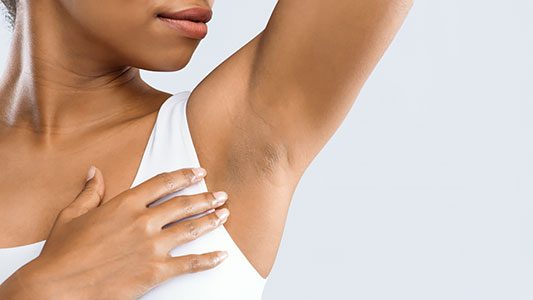
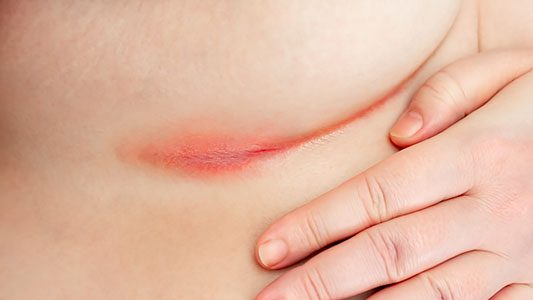
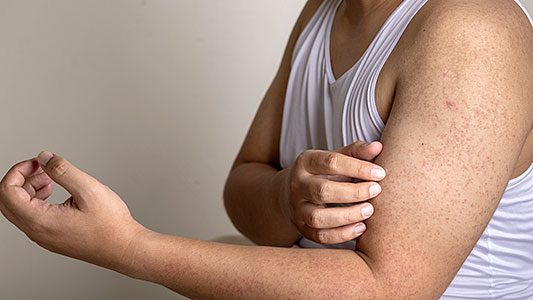
- Consideration for underarms/ palms/ soles/ trunk
- 35-Day BUD
- 30 g pump

This topical cream contains glycopyrrolate 2%. It is available by prescription in a 30 g pump.
This cosmetically elegant oil-in-water emulsion is designed for dermatologic preparations, incorporating a natural antioxidant and emollient to support skin health. Versatile and well-tolerated, it accommodates lipophilic drugs and acidic actives, is hypoallergenic, and dermatologist approved. With a white, shiny, low-viscosity texture for easy application, it provides a stable, reliable vehicle for advanced compounded skincare.
Glycopyrronium acts as a competitive blocker of acetylcholine receptors found in certain peripheral tissues, such as sweat glands. In patients with hyperhidrosis, it prevents acetylcholine from stimulating the sweat glands, thereby decreasing sweat production [1].
This cream may be considered by providers treating patients with hyperhidrosis.
Hyperhidrosis can be classified as primary or secondary, with primary hyperhidrosis (PHH) accounting for the majority of cases and characterized by sympathetic overactivity of eccrine sweat glands without an identifiable medical cause [2]. Clinically, PHH presents as bilateral and symmetric focal sweating, most commonly affecting the axillae, palms, soles, or craniofacial areas, with onset typically before age 25, absence of symptoms during sleep, frequent episodes, family history, and significant impairment of daily activities [3, 4]. In contrast, secondary hyperhidrosis (SHH) is associated with underlying conditions such as endocrine disorders, neurological diseases, malignancies, respiratory illness, psychiatric conditions, medications, or infections [4, 5]. It more often presents later in life, is generalized rather than focal, can be unilateral or asymmetric, and frequently persists during sleep [4].
Recent clinical studies demonstrate efficacy for topical glycopyrrolate 2% in treating hyperhidrosis. In a 2022 pilot study of facial hyperhidrosis, 75% of patients achieved complete response with 2% glycopyrrolate, a result comparable to botulinum toxin A injections but with faster onset, though shorter duration [6]. Case reports in craniofacial hyperhidrosis show significant reduction in facial sweating after the first application, with sustained efficacy over two years of follow-up [7]. For post-sympathectomy compensatory hyperhidrosis, 77% of patients reported excellent results, with complete cessation of sweating when using 1.5–2% topical glycopyrrolate for gustatory hyperhidrosis [8]. Additionally, a 2008 study comparing 2% topical glycopyrrolate to placebo on opposite sides of the forehead found a significant reduction in sweat production, with 88% of patients rating the anhidrosis effect as good to excellent and 96% reporting partial or full satisfaction with the treatment [9].
In conclusion, topical glycopyrrolate 2% cream may be a beneficial, well-tolerated treatment option for hyperhidrosis. Its mechanism of action through local anticholinergic effects provides targeted sweat reduction, making it an excellent option for patients seeking non-invasive treatment with quality of life improvements.
1. PRESCRIBER & PATIENT INFORMATION
Prescribing clinician’s name, licensing information, address and contact information. Patients’ full name, date of birth, shipping address and contact information.
2. COMPLETE PRESCRIPTION INFORMATION
Include: drug, dosage, and dosage form, quantity, SIG, and refills if requested.
3. PRESCRIPTION TRANSMITTAL
Fax: (940) 382-2694
Phone: 940-382-6758 | Speak to a pharmacist
Escribe ID: 0903012660 or CARIE BOYD Pharmaceuticals
• Select Medication from the drop-down menu (bulk ingredient or powder is OK)
• Use the words Please Compound in the SIG or Comments section followed by the compounded medication you want to prescribe.
NOTE: If you cannot find the same strength or form, that’s OK, write exactly what you want into the SIG or Comments section. In most cases we’ll be able to custom compound the prescribed medication.
Store at controlled room temperature. Protect from light.
[1] Journey Medical Corporation. (2022). Qbrexza (glycopyrronium) cloth, 2.4%, for topical use: Prescribing information. Retrieved from https://www.accessdata.fda.gov/drugsatfda_docs/label/2022/209320s007lbl.pdf
[2] Maazi M, Leung AK, Lam JM. Primary hyperhidrosis: an updated review. Drugs Context. 2025 Jun 16;14:2025-3-2. doi: 10.7573/dic.2025-3-2. PMID: 40575073; PMCID: PMC12201942.
[3] McConaghy JR, Fosselman D. Hyperhidrosis: Management Options. Am Fam Physician. 2018 Jun 1;97(11):729-734. PMID: 30215934.
[4] Walling HW. Clinical differentiation of primary from secondary hyperhidrosis. J Am Acad Dermatol. 2011 Apr;64(4):690-5. doi: 10.1016/j.jaad.2010.03.013. Epub 2011 Feb 18. PMID: 21334095.
[5] Ohshima Y, Tamada Y. Classification of Systemic and Localized Sweating Disorders. Curr Probl Dermatol. 2016;51:7-10. doi: 10.1159/000446753. Epub 2016 Aug 30. PMID: 27584957.
[6] Nofal E, Salem S, Khashaba SA. Intradermal Botulinum Toxin A Injection Versus Topical 2% Glycopyrrolate for the Treatment of Primary Facial Hyperhidrosis: A Pilot Study and Review of Literature. Dermatol Surg. 2022 Aug 1;48(8):843-848. doi: 10.1097/DSS.0000000000003490. Epub 2022 Jun 17. PMID: 35917265.
[7] Luh JY, Blackwell TA. Craniofacial hyperhidrosis successfully treated with topical glycopyrrolate. South Med J. 2002 Jul;95(7):756-8. PMID: 12144084.
[8] Kim WO, Kil HK, Yoon DM, Cho MJ. Treatment of compensatory gustatory hyperhidrosis with topical glycopyrrolate. Yonsei Med J. 2003 Aug 30;44(4):579-82. doi: 10.3349/ymj.2003.44.4.579. PMID: 12950111.
[9] Kim WO, Kil HK, Yoon KB, Yoon DM. Topical glycopyrrolate for patients with facial hyperhidrosis. Br J Dermatol. 2008 May;158(5):1094-7. doi: 10.1111/j.1365-2133.2008.08476.x. Epub 2008 Feb 22. PMID: 18294315.
- (940) 382-6758
- Monday through Friday 9:00 am - 6:00 pm CT
- [email protected]