Rx Only
Gel
- Estrogen–retinoid combination explored for photoaging
- Low-dose tretinoin for tolerability
- Unique drug combination
- 30 g pump
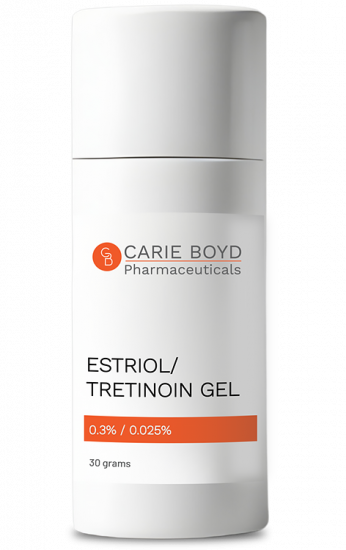
This silicone gel contains estriol 0.3% and tretinoin 0.025%. This dual-action gel is available by prescription in a 30 g pump.
This combination is formulated in a silicone gel. It contains a blend of silicones in a semipermeable polymer network and pracaxi oil, which is rich in skin-friendly fatty acids and lipids. The formula promotes a soothing and nurturing environment while providing long-lasting moisturization that protects the skin barrier and helps reduce water loss.
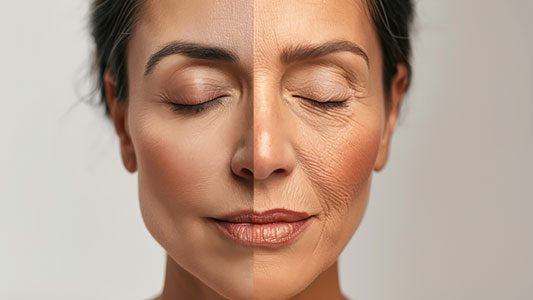
Topical estriol targets skin aging by stimulating collagen production, improving elasticity, enhancing moisture retention, and reducing wrinkle depth through activation of estrogen receptors in the skin [1]. It promotes keratinocyte renewal and may help restore a healthy skin microbiome [2, 3].
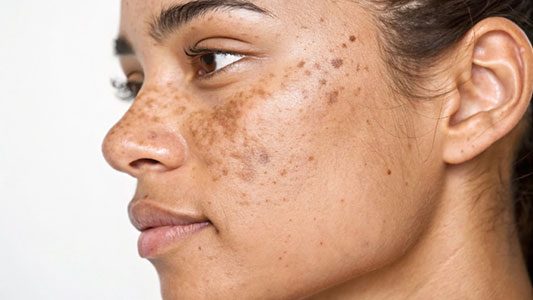
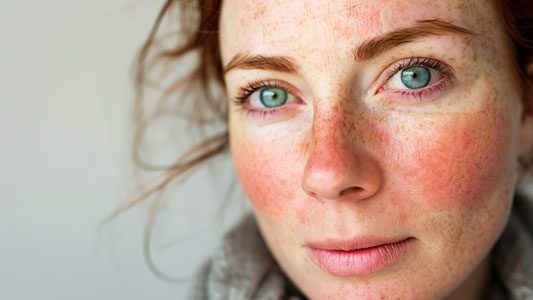
Tretinoin, a derivative of vitamin A, modifies epidermal cell turnover and differentiation. It is a versatile topical agent used for acne, aging skin, keratosis pilaris, rosacea, and hyperpigmentation [4].
It may be beneficial for several skin concerns, such as helping reduce the appearance of fine lines and wrinkles.
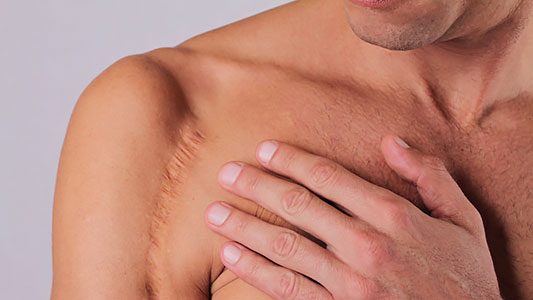
Topical estriol shows significant efficacy for skin aging, with one study demonstrating 61-100% wrinkle reduction and improvements in elasticity after 6 months [1]. Tretinoin has well-documented anti-aging benefits with studies showing significant improvement in photoaged skin after 8-12 months of use [5], and histological improvements including epidermal thickening, increased vascularity, and reduced wrinkles [6]. Additionally, one small study evaluated iontophoresis with estriol or tretinoin as a noninvasive treatment for atrophic acne scars. Clinical improvement was seen in nearly all patients without significant adverse effects. The study concluded that both methods are beneficial, well-tolerated alternatives to invasive scar treatments [7].
1. PRESCRIBER & PATIENT INFORMATION
Prescribing clinician’s name, licensing information, address and contact information. Patients’ full name, date of birth, shipping address and contact information.
2. COMPLETE PRESCRIPTION INFORMATION
Include: drug, dosage, and dosage form, quantity, SIG, and refills if requested
3. PRESCRIPTION TRANSMITTAL
Fax: (940) 382-2694
Phone: 940-382-6758 | Speak to a pharmacist
Escribe ID: 0903012660 or CARIE BOYD Pharmaceuticals
• Select Medication from the drop-down menu (bulk ingredient or powder is OK)
• Use the words Please Compound in the SIG or Comments section followed by the compounded medication you want to prescribe.
NOTE: If you cannot find the same strength or form, that’s OK, write exactly what you want into the SIG or Comments section. In most cases we’ll be able to custom compound the prescribed medication.
Store at controlled room temperature. Protect from light and freezing.
[1] Schmidt JB, Binder M, Demschik G, Bieglmayer C, Reiner A. Treatment of skin aging with topical estrogens. Int J Dermatol. 1996 Sep;35(9):669-74. doi: 10.1111/j.1365-4362.1996.tb03701.x. PMID: 8876303.
[2] Stevenson S, Thornton J. Effect of estrogens on skin aging and the potential role of SERMs. Clin Interv Aging. 2007;2(3):283-297. doi:10.2147/cia.s798
[3] Lephart ED, Naftolin F. Estrogen Action and Gut Microbiome Metabolism in Dermal Health. Dermatol Ther (Heidelb). 2022;12(7):1535-1550. doi:10.1007/s13555-022-00759-1
[4] Ebanks JP, Wickett RR, Boissy RE. Mechanisms regulating skin pigmentation: the rise and fall of complexion coloration. Int J Mol Sci. 2009;10(9):4066-4087. Published 2009 Sep 15. doi:10.3390/ijms10094066
[5] Weiss JS, Ellis CN, Headington JT, Voorhees JJ. Topical tretinoin in the treatment of aging skin. J Am Acad Dermatol. 1988 Jul;19(1 Pt 2):169-75. doi: 10.1016/s0190-9622(88)70161-9. PMID: 3045163.
[6] Griffiths CE, Kang S, Ellis CN, Kim KJ, Finkel LJ, Ortiz-Ferrer LC, White GM, Hamilton TA, Voorhees JJ. Two concentrations of topical tretinoin (retinoic acid) cause similar improvement of photoaging but different degrees of irritation. A double-blind, vehicle-controlled comparison of 0.1% and 0.025% tretinoin creams. Arch Dermatol. 1995 Sep;131(9):1037-44. PMID: 7544967.
[7] Schmidt JB, Binder M, Macheiner W, Bieglmayer C. New treatment of atrophic acne scars by iontophoresis with estriol and tretinoin. Int J Dermatol. 1995 Jan;34(1):53-7. doi: 10.1111/j.1365-4362.1995.tb04381.x. PMID: 7896490.
- (940) 382-6758
- Monday through Friday 9:00 am - 6:00 pm CT
- [email protected]